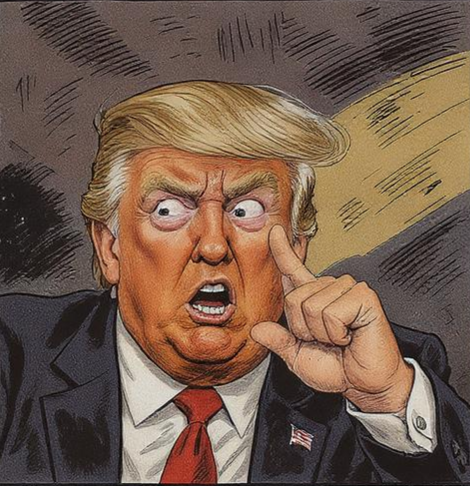
Once again, President Donald Trump is making headlines for all the wrong reasons. This time, he’s leveled baseless accusations of treason against former President Barack Obama, further feeding the cycle of misinformation and conspiracy theories that have defined much of his tenure. Days after sharing an AI-generated fake video showing Obama’s arrest—a disturbing display of digital manipulation—Trump doubled down on these dangerous lies, accusing Obama of attempting to “rig” the 2016 election without any evidence.
This rhetoric, as wild and unfounded as it is, serves as more than just an attempt to tarnish Obama’s legacy. It’s part of a larger strategy to deflect from the increasing scrutiny Trump faces over his own administration’s conduct, including the ongoing revelations about Jeffrey Epstein’s sex trafficking ring. It’s a sad reminder of how far Trump will go to distract from the very real issues that continue to plague his presidency and political future.
Trump’s Desperate Need for a Scapegoat
The White House’s recent tirade against Obama follows a familiar pattern: when in doubt, accuse the previous administration of malfeasance. Trump’s allegations come just days after a document from former Representative Tulsi Gabbard referred to Obama’s administration as being involved in criminal activity related to the 2016 election. However, these claims have been widely debunked. The bipartisan Senate Intelligence Committee, under Republican leadership, confirmed that while Russia attempted to interfere in the election, no votes were manipulated. The FBI investigation and subsequent reports on Russian interference have consistently found no evidence to support Trump’s outlandish claims of “rigging” by Obama.
Yet, here we are, with Trump ramping up the conspiracy machine. “They tried to steal the election,” Trump declared in the Oval Office, calling Obama’s alleged actions “treason” without offering a shred of proof. This isn’t about truth—it’s about crafting a narrative that fits Trump’s political agenda, no matter the damage done to the integrity of public discourse or trust in democratic institutions.
The AI-Generated Video: A New Low for Trump
The fact that Trump has now gone as far as to post an AI-generated fake video of Obama being arrested is a chilling example of how far he’s willing to stretch reality. The video, which was initially posted on TikTok before being reshared on Trump’s social media platform, is a clear attempt to manipulate public perception and incite further division. This kind of digital deception isn’t just irresponsible; it’s dangerous.
The use of AI to create false narratives blurs the line between truth and fiction, and when a figure like Trump, with millions of followers, shares it as if it’s fact, the consequences are far-reaching. This tactic—known as “deepfakes”—is already being used in harmful ways across the globe, but its deployment by a sitting president is unprecedented. It sets a dangerous precedent for how misinformation can be weaponized to sway public opinion, sow discord, and undermine faith in the democratic process.
A Mask for Greater Scandals
Why the focus on Obama? Why now? Critics argue that Trump’s latest outburst is a strategic distraction from the growing attention surrounding the Epstein case and his administration’s ties to convicted sex trafficker Ghislaine Maxwell. Trump has long had a complicated relationship with the Epstein scandal—something that is slowly but surely creeping back into the public eye.
It’s a classic Trump political tactic:
when under fire, create a scapegoat, distract the media,
and shift the focus elsewhere.
As public demand for greater transparency intensifies, Trump’s outrageous claims about Obama serve to steer the conversation away from his own legal woes. It’s a classic Trump political tactic: when under fire, create a scapegoat, distract the media, and shift the focus elsewhere. This time, though, Trump’s efforts seem more transparent than ever before. His conspiracy theories are increasingly seen as a desperate ploy to avoid accountability for his past actions and potential future legal consequences.
The Dangers of a Divisive, Distrustful Narrative
What’s most concerning here isn’t just Trump’s unhinged accusations, but the larger political culture they help cultivate. By stoking division, spreading lies, and undermining trust in public institutions, Trump is playing with fire. His rhetoric chips away at the fabric of democracy, and his continued use of false narratives contributes to a growing distrust of government and truth itself.
We cannot allow these conspiracies to go unchecked. It’s crucial that we call out misinformation and work toward a more accountable political environment, one where leaders are held to the highest standards of truth and integrity. The American public deserves better than this. We deserve leaders who confront the real issues, not those who exploit fake crises for political gain.
As this story unfolds, it’s essential that we remain vigilant in our commitment to the truth. Whether it’s Trump’s constant smearing of his political opponents or his attempt to rewrite history, we must resist the urge to be distracted by false narratives. The stakes are too high, and the future of our democracy depends on it.
Takeaway: Trump’s latest conspiracy theories about Obama are nothing more than a diversion. In times of crisis, he resorts to distraction tactics. The challenge now is not to fall for it.
Oh, and just for the record: Russia interfered.
Share this:

Discover more from The Progressive Lens
Subscribe to get the latest posts sent to your email.



3 thoughts on “Trump’s Desperate Distraction: Go After Obama”
Comments are closed.